


Intelligent, predictive scheduling for staff and space in ambulatory care.
Powered by real-time operational intelligence — not rules, ratios, or static forecasts.

.avif)
"If you were to ask me, are we appropriately staffed to take care of our patients tomorrow or next week, I’d give you a blank stare prior to TeamBuilder."
Rod Neill, COO Bon Secours Mercy Health Med Group

.png)










Manual, outdated processes erase visibility
Most ambulatory schedules still live in spreadsheets or static tools that can’t show where staff are deployed, how workload is shifting, or when clinics are falling behind — forcing reactive decisions and labor waste.

Clinic-level silos prevent system-wide coordination
Each clinic operates independently, making it impossible to see which clinics are overwhelmed or underutilized, where cross-coverage is possible, or where best practices are emerging.

Enterprise systems track cost centers, not locations
EHR, payroll, and timekeeping systems map people to cost centers, not actual clinics, creating a major blind spot around over/understaffing, ROI, and role-level performance.

Inpatient tools and ratios don’t fit ambulatory reality
Ambulatory workflows shift hour-to-hour, but most organizations rely on inpatient tools or ratio models that flatten demand — creating mismatched schedules, waste, burnout, and bottlenecks.



The shift to data-driven predictive scheduling is now essential. TeamBuilder’s patented technology is making a significant impact, creating new efficiencies in workforce management, with a strong focus on the critical ambulatory care space.

Niel Oscarson
KLAS

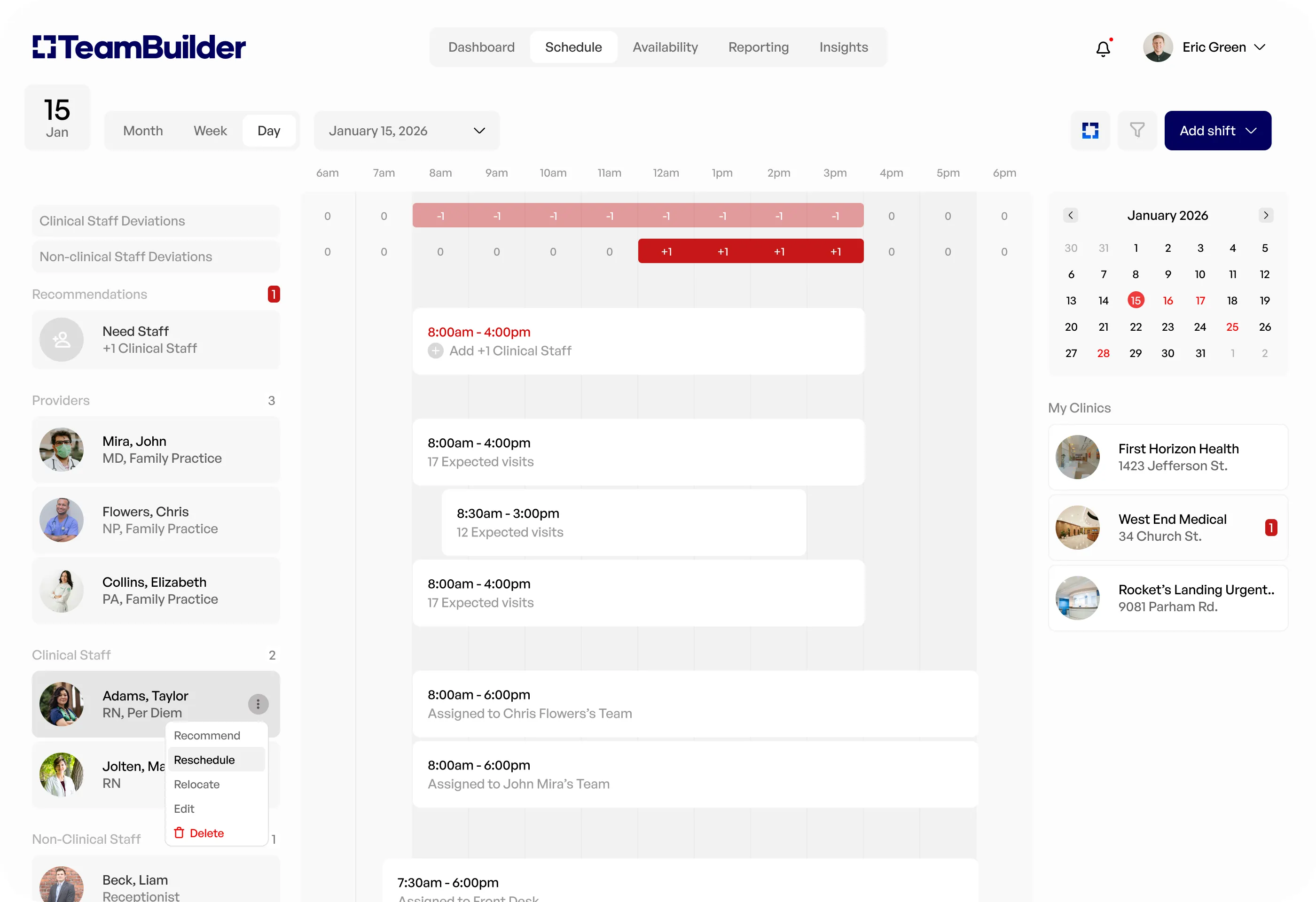

Smart Schedule
Here’s the schedule you should run next — optimized for forecasted volume and clinic workload and constraints.
Recommendations
Here’s what to adjust now — suggested scheduling changes that prevent overtime, bottlenecks, and access loss.

Operational Insights
Here’s what’s holding you back — unified visibility into scheduling performance + room utilization to pinpoint bottlenecks, wasted capacity, and access opportunities.

8-14% labor optimization opportunity
Identified through payroll data, workload modeling, and schedule analysis.

Enterprise-wide visibility
A clear view of who is working where across clinics, roles, and time of day - replacing spreadsheets and disconnected schedules.

Greater operational confidence
Leaders gain clarity into daily staffing decisions, coverage gaps, and workload patterns - enabling more informed, proactive management.

